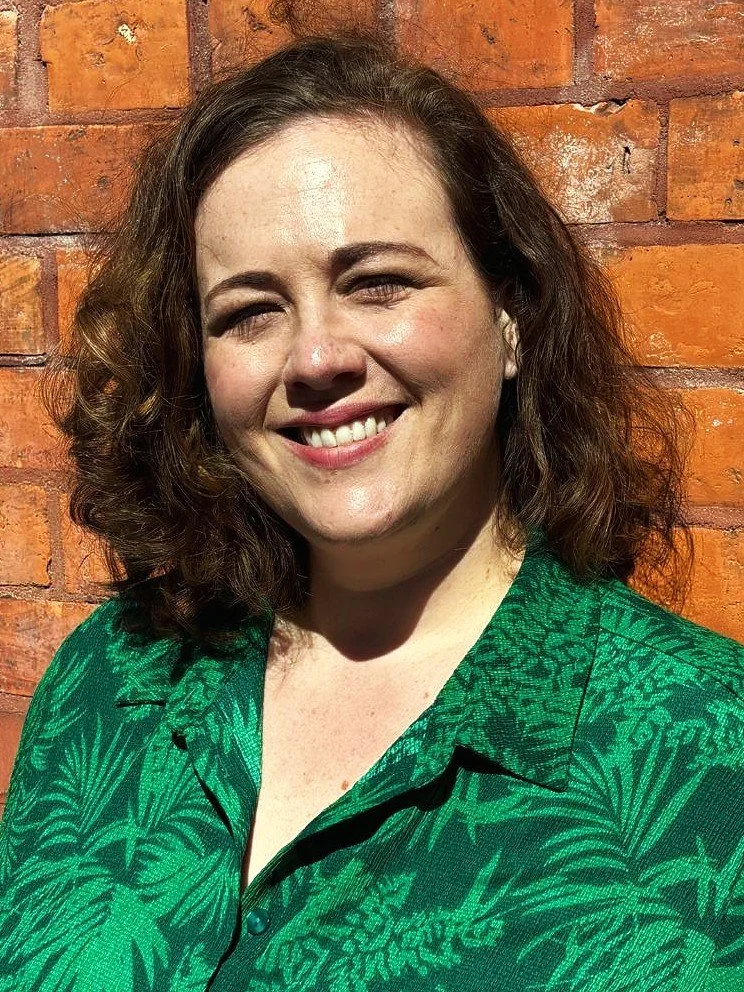
I am currently a Research Scientist and the Deputy Head of the Fertility & Well-being Lab at the Max Planck Institute for Demographic Research in Rostock, Germany.
I am a Research Scientist in the Fertility and Well-being Lab at the Max Planck Institute for Demographic Research in Rostock, Germany. My research examines fertility, family formation, and fecundity, with a particular focus on exploring the inequalities and structural determinants of unrealized fertility, or the gap between who wants children, who gets children, and the social structures that sit within this gap
One thread of this work sits at the intersection of biological and social factors. With colleagues on the BIOSFER project, I study predictors of fertility intentions among young adults in the Nordic countries, and the relationship between declining age at menarche and trends in age at first birth in low- and middle-income countries. I extend this work in research exploring inequalities in fecundity, contraceptive use, union formation, and birth outcomes across race/ethnicity and socioeconomic status in the U.S. context and among immigrant populations in the Finnish setting.
I currently am working on projects related to the politics of natalist demography, developing an empirically-founded theory of ambient uncertainty in fertility outcomes, and on the structural determinants of unrealized fertility — the gap between reproductive intentions and reproductive outcomes, and the social arrangements that produce it. Taken together, this body of work is intended to strengthen the evidence base for the social support and rights of populations that experience reproductive inequalities across the life course.
I am actively involved in the EAPS Working Group on Register Based Fertility Research and I regularly provide peer-review to major demographic and sociological journals and act as a discussant at flagship population science conferences. I additionally routinely teach self-developed curriculums on ‘Topics in Population, Health, and Social Demography’ and ‘Research Methods for Developing a Master’s Thesis’, and supervise PhD, Masters, and undergraduate students.
I previously explored these topics as a Postdoc with the Family Formations in Flux (FLUX) Consortium, based at the University of Helsinki, and am now continuing this work as a Research Scientist at the Max Planck Institute for Demographic Research in Rostock, Germany. This body of work is intended to contribute to the evidence for social support and rights of populations that experience reproductive inequalities across the life course.
For my doctoral research, I explored stratified reproduction, investigating the relationships between macro-level institutions and micro-level outcomes in inequality. My work has been published in the International Immigration Review, JAMA Internal Medicine, Journal of Marriage and Family, Social Science and Medicine, The Journal of Sex Research, Studies in Family Planning, Contraception, and the African Journal of Reproductive Health.
During my doctoral studies, I was supported by the National Institute on Aging, the National Institute of Child Health and Human Development, and the Holtz Center for Science and Technology Studies. I used intersectionality and reproductive justice frameworks to examine stratified reproduction, including novel research using in-depth interviews with young adult women during the COVID-19 pandemic to explore how uncertainty affected reproductive experiences, a critical discourse analysis of welfare reform debates in the 1990s, and a formal demographic analysis of intergenerational inequalities in exposure to climate change, fecundity, birth outcomes, and the right to give birth in the United States.
Prior to entering the doctoral program in Sociology at the University of Wisconsin, Madison, I received a B.A. in Social Anthropology from the University of Michigan, Ann Arbor in 2010, and an M.S.P.H. in International Health Systems from the Johns Hopkins Bloomberg School of Public Health. I also worked with the Population Council, USAID, Jhpiego, and UNAIDS before returning to graduate school.